
What does Flexible Office Space mean today?
What Is Flexible Office Space?
Flexible office space is a type of workspace that allows businesses and professionals to rent offices, desks, or meeting rooms without committing to long-term commercial leases. Instead of signing traditional multi-year agreements, companies can use office space through short-term, scalable agreements that adapt as their needs change.
Unlike traditional office space, flexible workspaces are typically fully furnished and ready for immediate use. They include essential infrastructure such as high-speed internet, utilities, furniture, meeting rooms, and reception services. This allows companies to begin working immediately without the time and expense required to build out an office from scratch. Over the past decade, flexible office space has become one of the fastest-growing sectors of commercial real estate. Businesses of all sizes from startups to large corporations are increasingly choosing flexible workspace solutions because they reduce upfront costs, lower risk, and provide the ability to scale office space as teams grow or change.
How Flexible Office Space Works


Flexible office space providers operate buildings or office suites designed to accommodate multiple companies under one roof. Instead of leasing entire floors or buildings to a single tenant, providers offer smaller workspaces and shared amenities that businesses can access through memberships or short-term agreements.
A flexible office membership typically includes:
- Fully furnished office space
- High-speed internet and Wi-Fi
- Utilities and building maintenance
- Access to meeting rooms and conference spaces
- Shared kitchen and lounge areas
- Mail handling and reception services
- Cleaning and office maintenance
Because the space is already built and operational, companies can move in quickly, often within days instead of waiting months for construction or office setup. Flexible workspace agreements are also designed to be adaptable. Businesses can add offices, reduce space, or change workspace types as their teams evolve.
Types of Flexible Office Space
Flexible office space can take several different forms depending on how much privacy, structure, and support a business need. These workspace types allow companies to choose the right balance between collaboration and privacy.
1) Private Offices in Coworking Spaces
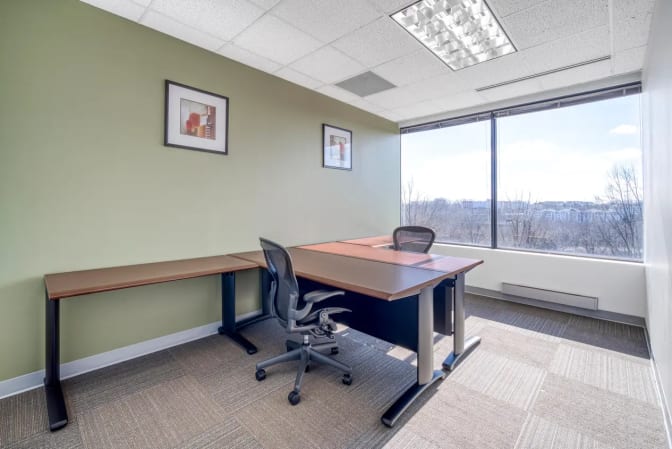
Private offices provide enclosed office suites within a shared workspace environment. Businesses have their own secure office while still benefiting from shared amenities throughout the building. This is a good option for businesses that want the maximum efficiency. Private offices are commonly used by small businesses, startup teams, remote teams needing a headquarters, and professionals who regularly meet clients.
Companies using private offices can typically access:
- Conference rooms
- Shared break areas and kitchens
- Lounge spaces
- Phone booths
- Reception services
- Community events and networking opportunities
This format combines the privacy of traditional office space with the flexibility and convenience of coworking environments.
2) Shared Coworking Desks

Coworking desks provide open workspace seating within a shared office environment. Members can work alongside other professionals while using common office amenities. In addition to workspace, coworking environments often provide opportunities for networking, collaboration, and community engagement. Coworking desks typically come in two forms:
Hot desks– Members can choose any available desk in an opened room when they arrive. This option offers maximum flexibility and is popular among freelancers and remote workers.
Dedicated desks -Members receive an assigned workstation that remains reserved for them.
3) Executive Office Suites
Executive suites provide private offices combined with shared business services. These environments often resemble traditional office space but offer significantly more flexibility. Executive suites typically include:
- Private offices
- Reception services
- Conference room access
- Mail and package handling
- Business address services
- Administrative support
This type of workspace is particularly popular among law firms, financial advisors, consultants, and professional service providers who need a polished office environment for meeting clients. Because executive suites share infrastructure across multiple tenants, they allow businesses to maintain a professional office presence without managing their own facility.
4) Day Offices and Meeting Rooms


Day offices are private offices rented for short-term use, often by the day or by the hour. Day offices provide the privacy of a traditional office without requiring a long-term commitment. They are commonly used by professionals who need temporary workspace while traveling for business, meeting clients in another city, or conducting interviews.
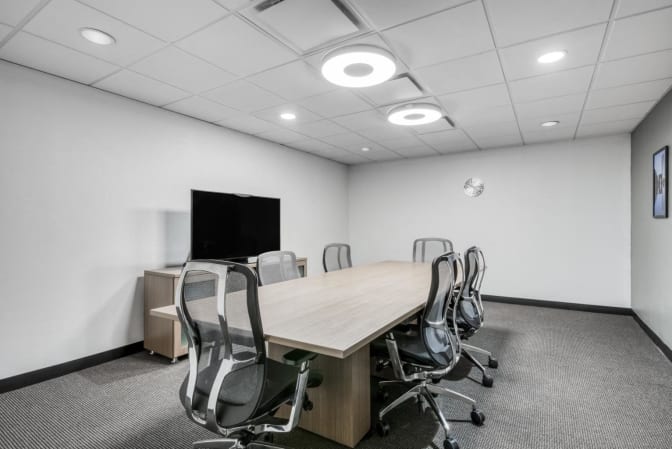
Flexible office providers typically offer meeting rooms, boardrooms, and conference spaces that businesses can reserve as needed. These rooms are commonly used for:
- Client meetings
- Team collaboration sessions
- Interviews and hiring
- Training programs
- Presentations and workshops
Meeting rooms are usually available for hourly or daily rental, allowing companies to host professional meetings without maintaining permanent office space.
Key Benefits of Flexible Office Space
Flexible workspaces have grown rapidly because they solve many of the challenges associated with traditional office leasing. Businesses gain operational advantages that allow them to focus on growth rather than managing office infrastructure.
Lower Upfront Costs
Traditional office leases often require significant upfront investment, including:
- Office construction and build-outs
- Furniture and equipment
- Technology infrastructure
- Security deposits and broker fees
Flexible offices eliminate many of these expenses by providing fully equipped workspaces that are ready to use immediately.
Shorter Lease Commitments
Conventional office leases often require commitments of five to ten years. Flexible offices offer much shorter agreements, often ranging from month-to-month memberships to one- or two-year terms. This reduces risk for companies that may experience changes in team size or operational needs.
Faster Move-In Times
Because flexible offices are already furnished and operational, businesses can move in quickly sometimes within 24 to 72 hours.
This speed can be critical for:
- Fast-growing startups
- Companies opening new markets
- Teams relocating quickly
Scalability
Businesses rarely grow in perfectly predictable ways. Flexible office space allows companies to add or reduce offices as their teams change. Instead of relocating every time a company grows, many flexible office providers allow tenants to expand within the same building.
Professional Office Environment
Flexible offices provide a professional setting that can be important when meeting clients, hosting partners, or recruiting employees. Features like reception areas, conference rooms, and modern office design create an environment that reflects positively on the businesses operating within the space.
Why Flexible Office Space Is Growing
The demand for flexible office space has increased dramatically in recent years due to several major workplace trends. The first, the hybrid model works. Many companies have adopted this model which allows them to maintain an office without a large central headquarters. Second, the remote workforce is expanding, so now business can have multiple offices across cities easily. Third there is a reduced real-estate risk, meaning that because of the shortened term length companies’ risk less. And finally, companies can quickly scale both up and down with minimal capital risk.
Flexible Office Space vs Traditional Office Leasing
Understanding the differences between flexible workspace and traditional office space can help businesses choose the right option for their needs.
Traditional Office Space
- Long-term leases (5–10 years)
- Tenant responsible for build-out and furniture
- Utilities and services managed separately
- Large upfront costs
- Long setup timelines
Flexible Office Space
- Shorter agreements and memberships
- Fully furnished offices
- Utilities and services included
- Lower upfront costs
- Move-in ready workspace
| Feature | Traditional Lease | Flexible Office Space |
|---|---|---|
| Commitment | 5–10 years | Month-to-month / 1–2 years |
| Capital Outlay | High (Build-out + Furniture) | Low (Plug-and-play) |
| Setup Time | 3–6 months | 24–72 hours |
| Services | Managed by tenant | All-inclusive (WiFi, Cleaning, Utilities) |
| Scalability | Fixed footprint | Scalable (Add/remove desks easily) |
For many modern businesses, flexible offices provide a more adaptable and cost-efficient alternative to conventional leasing.
Flexible Office Space Definition:
Flexible office space is a workspace solution that provides ready-to-use offices, desks, and meeting rooms through short-term agreements and shared services. These environments allow businesses to maintain a professional office presence while avoiding the cost, complexity, and long-term commitments associated with traditional office leases.
Frequently Asked Questions
Frequently Asked Questions
Most flexible office providers offer agreements ranging from month-to-month memberships to multi-year office agreements, depending on the workspace type and provider.
Yes. Many large corporations use flexible office space for satellite offices, project teams, or regional hubs. Flexible workspace allows large organizations to expand into new markets quickly without long-term real estate commitments.
Get started
Contact us
Your inquiries, handled with precision and speed.
Book a tour
Explore our spaces at your convenience.
Customize your workspace
Choose your layout and terms effortlessly.
Get to work
Move into your office today.