
Office Space for Law Firms
Coworking for Lawyers: A Guide to Office Space for Attorneys
For attorneys, an office is more than just a place to get work done. It is a place where you meet clients, handle sensitive information, prepare cases, and build your firm’s reputation. Managing client expectations and the style you work is a big factor in the workspace you choose. Traditionally, law firms have relied on conventional office leases to create a professional environment. As of late, coworking and private office memberships have introduced more flexible alternatives. Attorneys can now access professional offices, reception services, meeting rooms, and shared amenities without taking on the responsibilities of managing an entire office, all for one monthly bill. But not every coworking space is a good fit for a law firm. The level of privacy, professionalism, and support can vary significantly between locations and providers. Whether you’re opening a solo practice, expanding a small firm, or looking for an alternative to a traditional lease, here’s what attorneys should consider when choosing coworking and private office space.
Is Coworking a Good Fit for a Law Practice?
When considering where to establish your law practice, there are a lot of factors. Unlike some professions, attorneys need a workspace that supports both their day-to-day responsibilities and the expectations of their clients. Coworking spaces come in a variety of types. Some offer open desks in a casual, coffee-shop-style environment, while others provide fully furnished private offices that look and feel slightly more like traditional executive suites. For attorneys, the second option is likely to be a better fit. A professional coworking environment can provide many of the benefits of a traditional law office, including private workspaces, staffed reception areas, and conference rooms, without requiring a long-term lease. Premium coworking spaces also offer receptionists who greet clients, handle inbound calls, and cultivate a professional first impression. For solo attorneys and small firms, these services can be particularly valuable when hiring dedicated administrative staff isn’t practical. The key is choosing a space that balances the flexibility of coworking with the privacy and professionalism your practice requires.
What to Look for When Choosing Office Space for Your Law Firm
1. A Professional, Private Workspace


Professionalism is one of the most important considerations when choosing an office for your law practice. Just as your appearance communicates something about you, your office communicates something about your firm. A well-designed office can help make clients feel confident in their decision to work with you. From the reception area to the conference room, every part of the experience contributes to their view of the firm. However, appearance is only one part of the equation. Attorneys regularly handle sensitive conversations, confidential documents, and private client information. Working at an open desk or in a shared lounge can make these responsibilities more difficult. A private office provides an enclosed environment where you can conduct calls, prepare cases, and meet with clients without the constant distractions of a shared workspace. When touring potential office spaces, pay attention to the layout, noise levels, and degree of separation between offices. Look for a space that you would feel comfortable bringing an important client into.
2. A Convenient Location for You and Your Clients
Location may seem like an obvious consideration, but for law firms, it can have a significant impact on daily operations. Your office should be convenient for you, but it should also be accessible to the people you serve.If your practice regularly requires court appearances, proximity to courthouses may also be a priority. If your primary customers are businesses, being near commercial districts and other professional services could make more sense. Client convenience is another important factor. Consider whether the building has accessible parking, nearby highways, and a location that is easy to find. For growing firms, location may also influence recruiting. An office in a desirable business district with nearby restaurants and amenities can be more appealing to prospective employees. An impressive office is valuable, but it should also make your workday easier.
3. 24/7 Access to Your Office


Legal work doesn’t always fit neatly into a nine-to-five schedule. Between approaching deadlines, trial preparation, and unexpected client needs, attorneys may find themselves working early mornings, late evenings, or weekends. This makes office accessibility particularly important. Some coworking memberships limit access to normal business hours, while others provide members with access around the clock. For attorneys, having a workspace available whenever work demands it can be a major advantage. When comparing office spaces, ask whether 24/7 access is included, whether building security remains active after hours, and whether clients can attend scheduled meetings outside normal operating hours. The flexibility to work on your schedule is a major reasons to consider a private office membership.
4. A Professional Business Address
Your firm’s address is part of its professional identity. It appears on your website, business cards, legal directories, and other client-facing materials. For smaller law firms, an established business address can help create a more professional presence. Operating from home may be convenient, but using a residential address can introduce privacy concerns and may not create the impression you want for your firm. Coworking spaces and executive suites often provide professional business addresses in established commercial buildings. Some also offer virtual office memberships, allowing attorneys to maintain a business address and access meeting rooms without occupying a private office full-time. However, attorneys should verify that their chosen address and office arrangements comply with applicable state bar rules, advertising requirements, and any physical-office or registration requirements. The right business address should support your firm’s professional image while remaining practical for your day-to-day operations.
5. Confidential Meeting Rooms


Whether you’re discussing a family law matter, reviewing financial documents, or preparing a client for litigation, a private setting is essential. This makes enclosed meeting rooms one of the most important amenities to evaluate. Many premium coworking spaces offer conference rooms with professional furnishings, presentation technology, and space for multiple attendees. These rooms can be useful for client consultations, depositions when appropriate, internal meetings, and discussions with other professionals. Before choosing a workspace, consider how frequently you’ll need access to meeting rooms, how far in advance they must be reserved, and whether the rooms provide sufficient speech privacy. It’s also worth understanding how meeting room pricing works. Some memberships include a certain number of hours, while others charge separately for each reservation. For solo attorneys who don’t need a large office, access to professional meeting rooms can provide the flexibility to host clients without paying for space that sits unused most of the week.
6. Reception and Administrative Support
First impressions often begin before a client even meets their attorney. When someone arrives at your office, who greets them? Where do they wait? What happens when someone calls while you’re in a meeting? These small details can shape how clients perceive your firm. Many premium coworking spaces include staffed reception areas where guests are welcomed and directed to the appropriate office or meeting room. Some also offer call answering, mail handling, and other administrative services. For solo practitioners, this can be especially helpful. Rather than interrupting your work to manage every visitor or incoming call, you can benefit from a more established office experience without immediately hiring a full-time receptionist.
7. Flexible Terms and Room to Grow
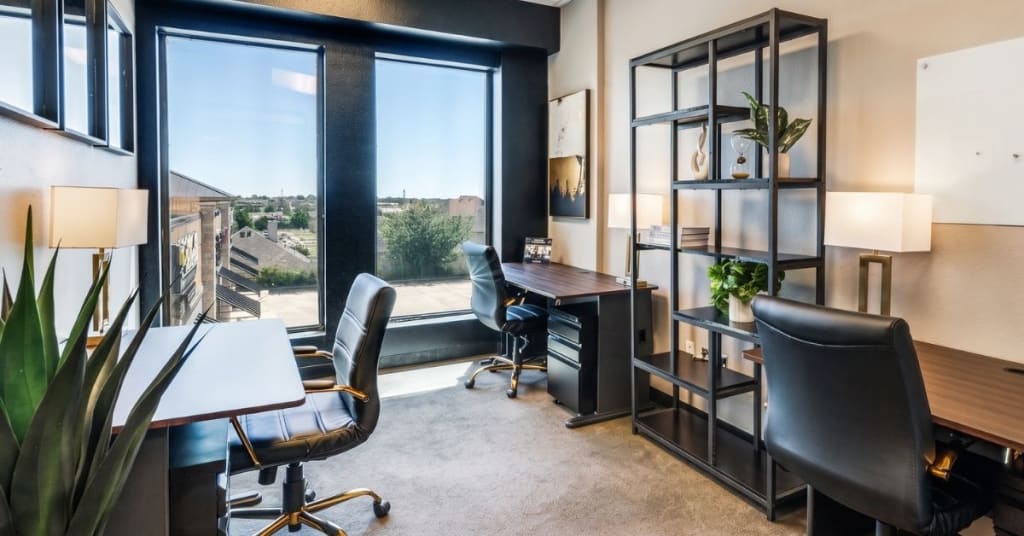

One of the biggest challenges of a traditional office lease is predicting how much space your firm will need in the future. A solo attorney may only need one office today but could eventually hire associates, paralegals, or administrative employees. Traditional leases can make these changes more complicated, particularly when you’re committed to a fixed amount of space for several years. Flexible office memberships offer an alternative. Depending on the provider, attorneys may be able to start with a smaller private office and move into a larger one as their practice grows. Some locations also offer multi-office configurations or team suites for firms that need a combination of private workspaces and collaborative areas. This flexibility can be particularly appealing to newly established firms that want a professional presence.
8. All-Inclusive Pricing and Predictable Expenses
When comparing office options, it’s important to look beyond solely the advertised monthly rent. Traditional office leases may come with additional expenses for furniture, utilities, internet, cleaning, maintenance, and other operating costs. These expenses can add up, especially for smaller firms. Many coworking and private office providers combine several of these services into a single monthly membership. Depending on the location and agreement, this may include furnished offices, internet, utilities, reception services, and shared amenities. For attorneys starting a practice, the ability to move into a furnished office without purchasing furniture or coordinating multiple service providers can simplify the process. However, not every coworking membership is truly all-inclusive. Ask about additional charges for meeting rooms, parking, printing, mail services, and other frequently used amenities.
Can Lawyers Use Coworking Spaces While Maintaining Client Confidentiality?
One of the most common concerns attorneys have about coworking is confidentiality. Lawyers have professional obligations to protect information relating to client representation, regardless of where they work. The American Bar Association’s Model Rule 1.6 requires lawyers to make reasonable efforts to prevent unauthorized access to or disclosure of client information. The ABA also addressed office-sharing arrangements in Formal Opinion 507, explaining that lawyers can share office space while remaining responsible for confidentiality, conflicts of interest, supervision, and appropriate communication about their practices. This means coworking is not automatically unsuitable for lawyers, but the workspace must be evaluated carefully. Attorneys should consider whether conversations can be overheard, whether client documents can be securely stored, how internet access is managed, and whether shared staff may encounter confidential information. A private office with appropriate security precautions will generally offer more control over these concerns than an open coworking desk. Attorneys should also review the professional conduct rules and ethics guidance applicable in their jurisdiction before selecting an office-sharing arrangement.


Coworking vs. Traditional Office Space for Lawyers
Both coworking and traditional office leases can provide professional environments, but they offer different advantages.
| Consideration | Coworking / Private Office Membership | Traditional Office Lease |
| Lease flexibility | Often shorter, more flexible agreements | Typically longer commitments |
| Furniture | Frequently included | Often purchased separately |
| Reception | Included | Usually managed by the firm |
| Meeting rooms | Shared and reservable | Dedicated if included in the leased space |
| Utilities and internet | Frequently bundled | May require separate arrangements |
| Expansion | Allow flexible upgrade options | Depends on lease terms and available space |
| Control | Limited by provider policies and shared facilities | Greater control over the leased premises |
For large, established law firms that require extensive customization, dedicated facilities, and complete control over their office environment, a traditional lease may be the better option. For solo attorneys and smaller practices, a private office membership can provide many of the same day-to-day benefits with fewer operational responsibilities. Ultimately, the right choice depends on how your firm operates, how frequently you meet with clients, and what level of flexibility you need.
What Type of Coworking Space Is Best for Attorneys?
Not all coworking memberships offer the same experience. Understanding the different options can help attorneys avoid paying for unnecessary space or choosing an environment that doesn’t meet their needs.


Open Coworking Desks
Open coworking spaces generally provide access to shared desks, lounges, and common areas. They can be a convenient option for administrative tasks, networking, or work that doesn’t involve sensitive information. However, the lack of privacy makes them less suitable for confidential client calls and meetings.
A part-time private office can be a good option for attorneys who work remotely most days but still want a professional place to meet clients and focus on their work. These memberships typically provide access to a private office on designated days or according to a reservation schedule.
For attorneys who regularly meet with clients or need a consistent place to work, a full-time private office is often the strongest option. An enclosed workspace gives attorneys the ability to leave things locked over night while also allowing them to benefit from shared amenities, professional reception areas, and meeting rooms.
Growing firms may need space for multiple attorneys, legal assistants, and administrative employees. Team offices and suites can provide a combination of individual workspaces and shared areas while at the same time reduce some of the responsibilities associated with managing a traditional office.
Find the Right Office for Your Law Practice
The right workspace should make it easier to practice law, not create additional responsibilities. For attorneys, that means finding a balance between professionalism, confidentiality, accessibility, and flexibility. At Lucid Private Offices, attorneys and small law firms can choose from furnished private offices, flexible office memberships, and professional meeting rooms designed to support a productive workday. With welcoming reception areas, professionally designed workspaces, and flexible office options, Lucid provides an alternative to traditional office leasing. Whether you’re starting your own firm, moving out of a home office, or expanding your practice, finding the right office environment is an investment in your business.


Explore Lucid Private Offices for Law Firms or schedule a tour to find a workspace that fits your practice.
Yes. Lawyers can work from coworking spaces, provided they take appropriate measures to protect confidential client information and comply with applicable professional conduct rules. Private offices are generally better suited to legal work than open desks because they provide greater control over conversations and documents.
A private office is often a better fit for attorneys who regularly handle confidential information, conduct client meetings, or need a quiet environment for focused work. Many coworking providers offer private offices, allowing attorneys to combine privacy with shared amenities and flexible terms.
A law firm may be able to use a virtual office address, but the rules depend on the jurisdiction and how the address is represented. Attorneys should verify applicable bar rules, business registration requirements, and advertising regulations before using a virtual office address.
Attorneys should prioritize private workspaces, confidential meeting rooms, reliable internet, secure access, professional reception services, and convenient parking. Flexible terms and access outside normal business hours can also be valuable.
It can be, particularly for solo attorneys and small firms. Coworking memberships often combine furniture, utilities, internet, and shared amenities into one monthly fee. However, the total cost depends on the office size, location, membership terms, and any additional services required.
Get started
Contact us
Your inquiries, handled with precision and speed.
Book a tour
Explore our spaces at your convenience.
Customize your workspace
Choose your layout and terms effortlessly.
Get to work
Move into your office today.