The Ideal Workspace: How Office Design Impacts Productivity, Wellbeing, and Retention

Employee well-being has become more of a consideration for job hunters in the professional world. There are many elements that contribute to employee satisfaction, but a major factor is the workspace you provide them. After all, your team might be spending (depending on your business model) 40 hours a week at work. That is roughly a third of their waking hours! You don’t just need an office that maximizes your business’s productivity—though you do need that—you need an office that is worth the commute for your team. So how do you design that? What are some important factors?
Workspace Variety


Many in the workforce complain that there are too many distractions in the office for efficient deep work. Collaboration and verbal communication are great for building team culture, but for someone who wants to put their head down and focus, these things can turn into distractions. An office needs to be able to provide quiet space for tasks that require concentration.
Some might argue that working from home lets them stay “in the zone” for more of the day and propose remote work as the solution to the problem above. But while home offices are comfortable and quiet, working solely from home can be isolating and lead to problems like burnout and depression. Nobody wants that either. An office that can provide a quiet workspace when you need it but also keeps the community element that meets the fundamental human need for social connection is the best of both worlds.
While there is a time for focused deep work, there are also times when you need to meet as a team or, especially for extraverted workers, when you just want to be around people. To accommodate these needs, a good office can provide meeting rooms and open workspaces. Some employees might prefer to stick to one space all the time, but for some, a periodic change of scenery and the ability to pick the right space for the task at hand will minimize monotony and increase productivity.
Workplace amenities
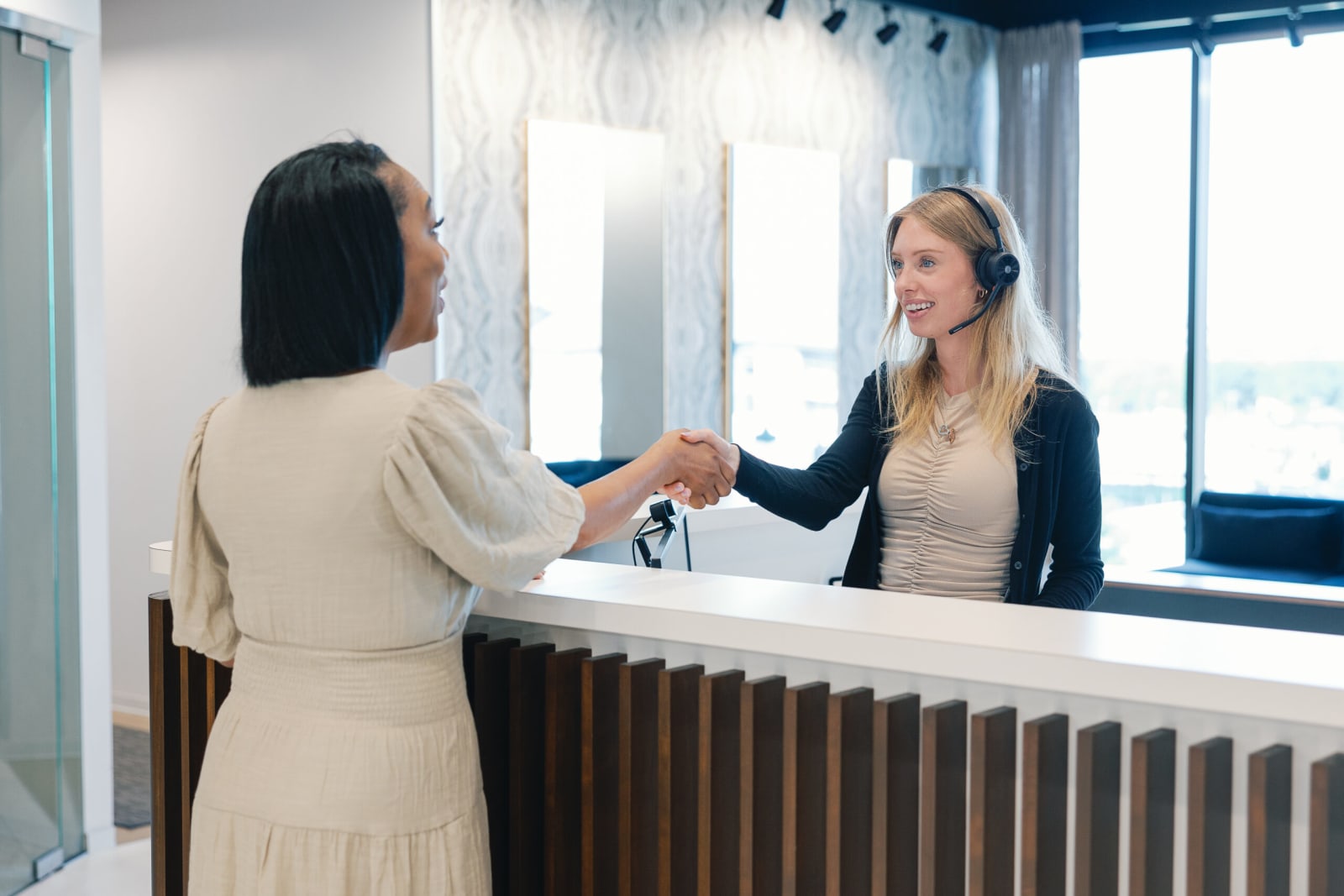

The little things count when it comes to supporting your team. Things like printing, high-speed Wi-Fi, tech support, and janitorial services are essential, but bonus points for easy parking, a reliable receptionist, and good coffee!
A little bit of natural light goes a long way
Finding office space with natural lighting is an investment in your team’s performance. “How?” you might ask.
Everyone knows that you sleep better if you minimize blue light exposure at night, but did you know that the circadian rhythm is impacted by daytime light intake as well? Both direct and indirect sunlight influence the body’s melatonin secretion, which improves sleep, leaving workers better rested and happier.
The benefits of natural lighting don’t end with the sleep cycle. Sunlight also influences the production of serotonin, a mood boosting, calming, and focus-inducing neurotransmitter. Bright light in general also increases alertness and vitality because of the effects on endocrine and neuropsychological responses induced by its shorter wavelengths. So, overall, a sunny office is likely to be more positive, less anxious, and get more results than one with classic dim fluorescent lighting.
That same NIH study found a positive correlation between sunlight and both job satisfaction and organizational commitment. Employees who know that you care about their happiness as well as their productivity are more likely to stick with the company and work harder because they feel appreciated. Research from the University of Oxford Business School found that happy employees are 13% more productive than unhappy ones. Sunlight is a surefire way to increase your team’s happiness. That is why putting your employees in an environment with easy access to sunlight is a long-term investment in your company’s productivity.
Work life balance


What better way to make sure employees can focus on their personal lives when they clock off then actually creating a physical separation between work and home? When your home office is always right down the hall, the line between work life and home life can quickly get blurry.
While being at home for work might lower your stress levels while you’re on the clock, being “at work” when you’re off the clock can break down the barrier between career life and family or personal life, causing just as many issues as the stress often associated with a commute and an office. Without that barrier, true rest becomes harder to achieve. If your team is not getting rest and energy from home life, they will not be able to be energetic contributors at work, or worse, they could suffer in the long run from burnout. Not ideal. The psychological buffer provided by leaving the house for work can be a valuable contribution to the energy, productivity, and long-term satisfaction of your team.
Whether you are strategizing how to create the ideal office from scratch or just looking to incorporate some new elements into the work environment you know and love, all of these features, from noise level to lighting to location, deserve some consideration as you go about crafting the workspace of your dreams.
A productive workspace balances focus, collaboration, and comfort. Key elements include access to quiet areas for deep work, collaborative spaces for meetings, reliable technology, natural lighting, and thoughtful amenities. A well-designed office reduces distractions while supporting different work styles.
Office design plays a major role in employee wellbeing by influencing stress levels, mood, and overall job satisfaction. Features like natural light, comfortable furniture, and access to both social and private spaces can improve mental health, reduce burnout, and increase engagement.
Coworking spaces offer a balance between focus and community. While working from home can reduce distractions, it can also lead to isolation. Coworking environments provide social interaction, structure, and professional amenities while still allowing flexibility and access to quiet work areas.
Workspace variety allows employees to choose the best environment for their task whether that’s a quiet room for deep focus or a collaborative space for teamwork. This flexibility reduces monotony, minimizes distractions, and helps people stay engaged throughout the workday.
At a minimum, offices should offer high-speed internet, printing, and tech support. High-quality coworking spaces often go further with features like meeting rooms, reception services, easy parking, and premium coffee—small details that significantly improve the daily work experience.
Get started
How it works
Contact us
Your inquiries, handled with precision and speed.
Book a tour
Explore our spaces at your convenience.
Customize your workspace
Choose your layout and terms effortlessly.
Get to work
Move into your office today.